Technical Reference
Pepsin Powder Handling and Storage Guide
Operational guidance for receiving, storing, handling, and preparing pepsin powder for controlled-acidity protein processing environments.
Technical Reference
Operational guidance for receiving, storing, handling, and preparing pepsin powder for controlled-acidity protein processing environments.
Pepsin is built for acidic protein processing. That same low-pH operating profile should shape how the powder is received, stored, opened, weighed, and introduced into production.
For B2B teams, the objective is simple: protect enzyme performance, reduce batch variability, and keep handling practices aligned across procurement, warehouse, QA, and production.
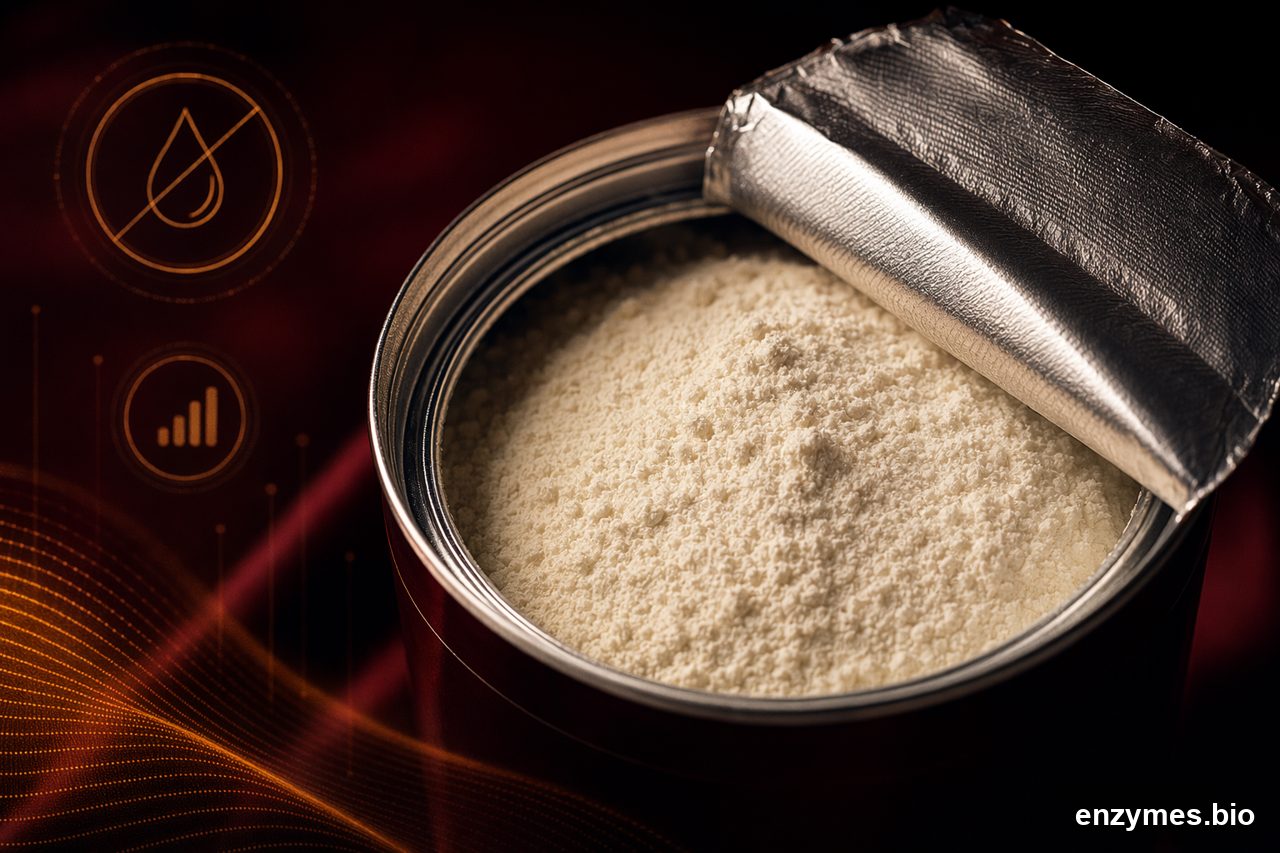
Pepsin is an aspartic endopeptidase used where protein cleavage must occur under acidic conditions. Poor storage or rough handling can create avoidable process noise: slower hydrolysis, inconsistent solubility, moisture uptake, caking, or premature performance loss.
The critical control points are:
Pepsin powder should be treated as a technical processing input, not a commodity ingredient.
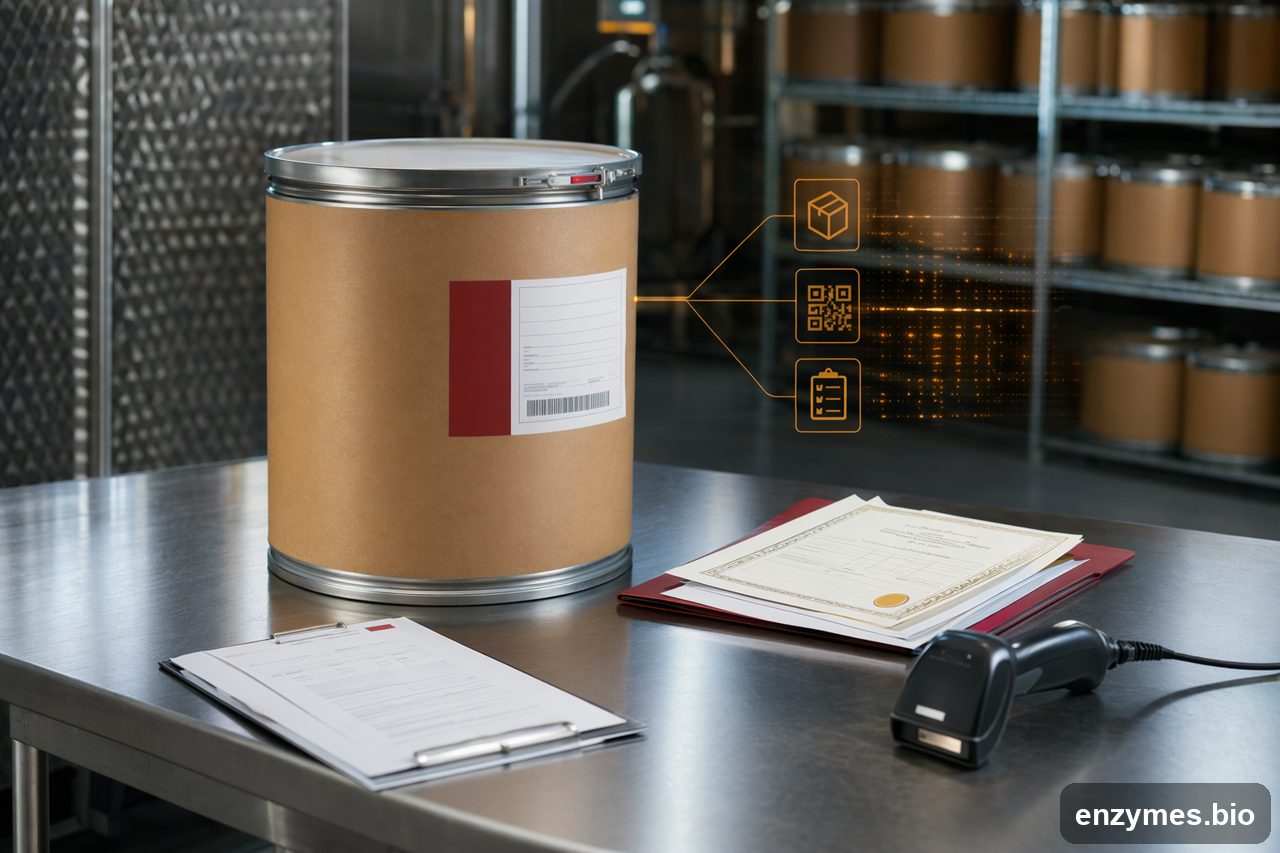
When material arrives, confirm that the shipment matches the purchase order, product specification, lot documentation, and certificate of analysis. Inspect the container before moving it into inventory.
If the container is compromised, quarantine it before use. Do not blend questionable lots into production as a workaround.
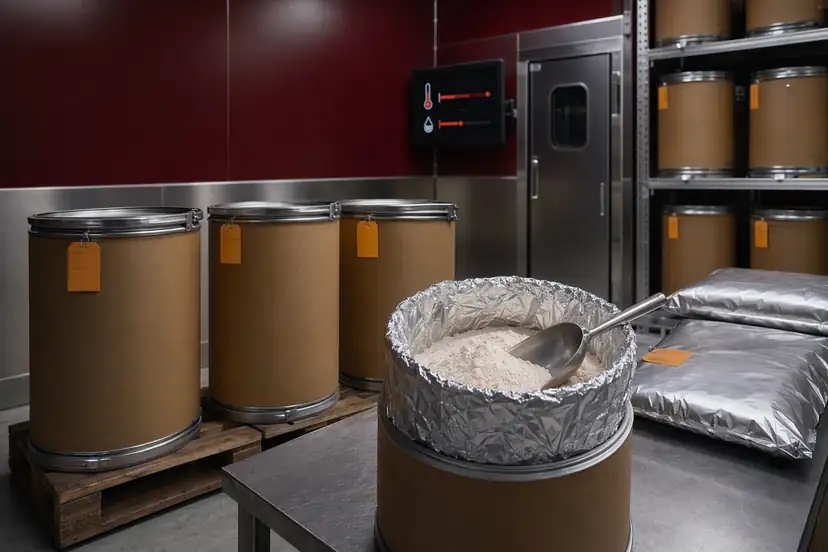
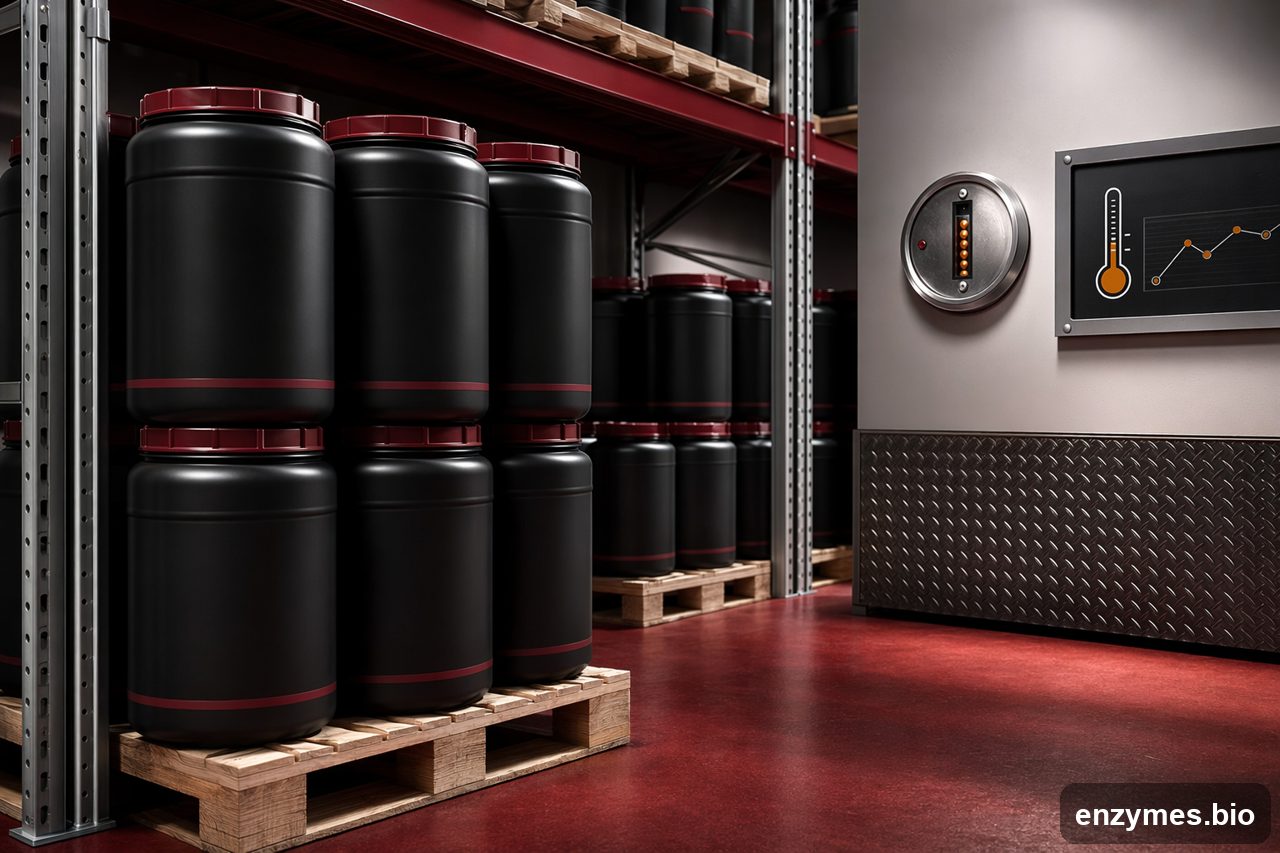
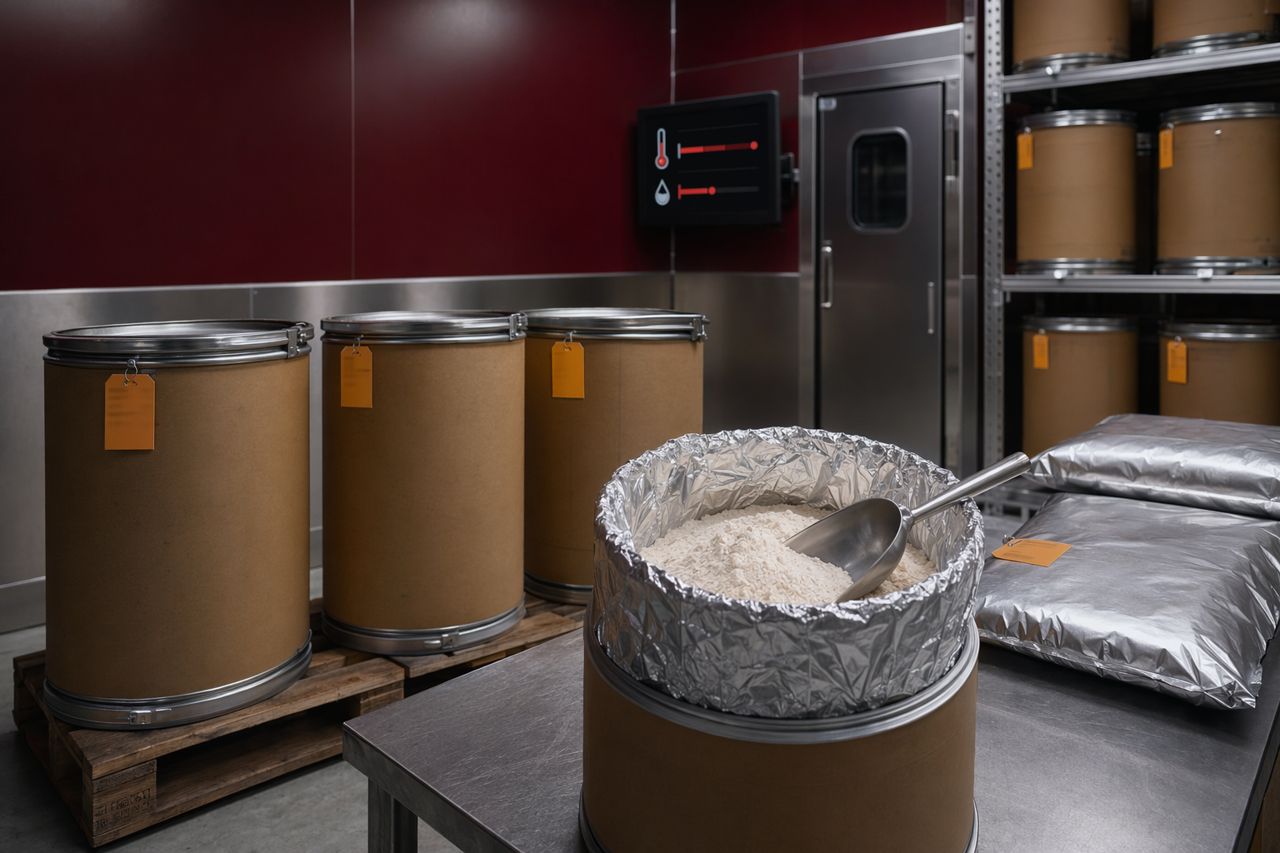
Pepsin powder should be stored in its original closed container until needed. The warehouse environment should be dry, clean, and protected from direct heat, direct sunlight, standing water, and aggressive odors.
Pepsin is selected for acidic processing. Extended exposure to unsuitable pH environments, especially alkaline residues or cleaning carryover, can reduce functional performance.
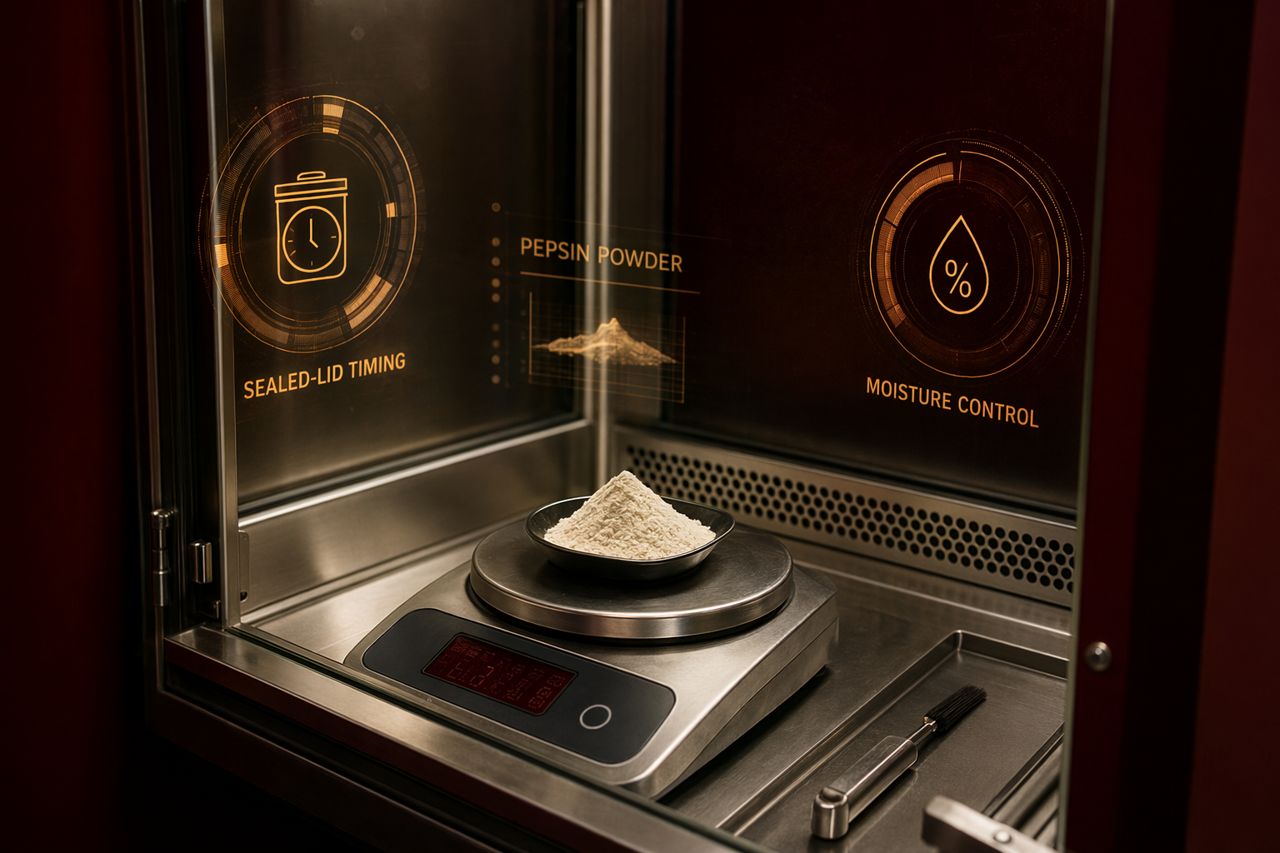
The highest-risk moment is often not storage itself. It is opening a cold or sealed container into a humid room, then leaving it exposed during staging or weighing.
Allow the sealed container to equilibrate to the handling area when needed. This reduces condensation risk on the powder or inner liner. Confirm that the weighing room is clean, dry, and ready before breaking the seal.
For multi-shift operations, partial containers should not drift between rooms without traceability. Treat every reopened package as a controlled material event.
Pepsin powder can become airborne during scooping, dumping, or charging. Use site-approved engineering controls and PPE based on the SDS and internal risk assessment.
Practical controls may include:
The goal is not just operator protection. Dust control also improves housekeeping, reduces cross-contact risk, and prevents material loss during high-value production.
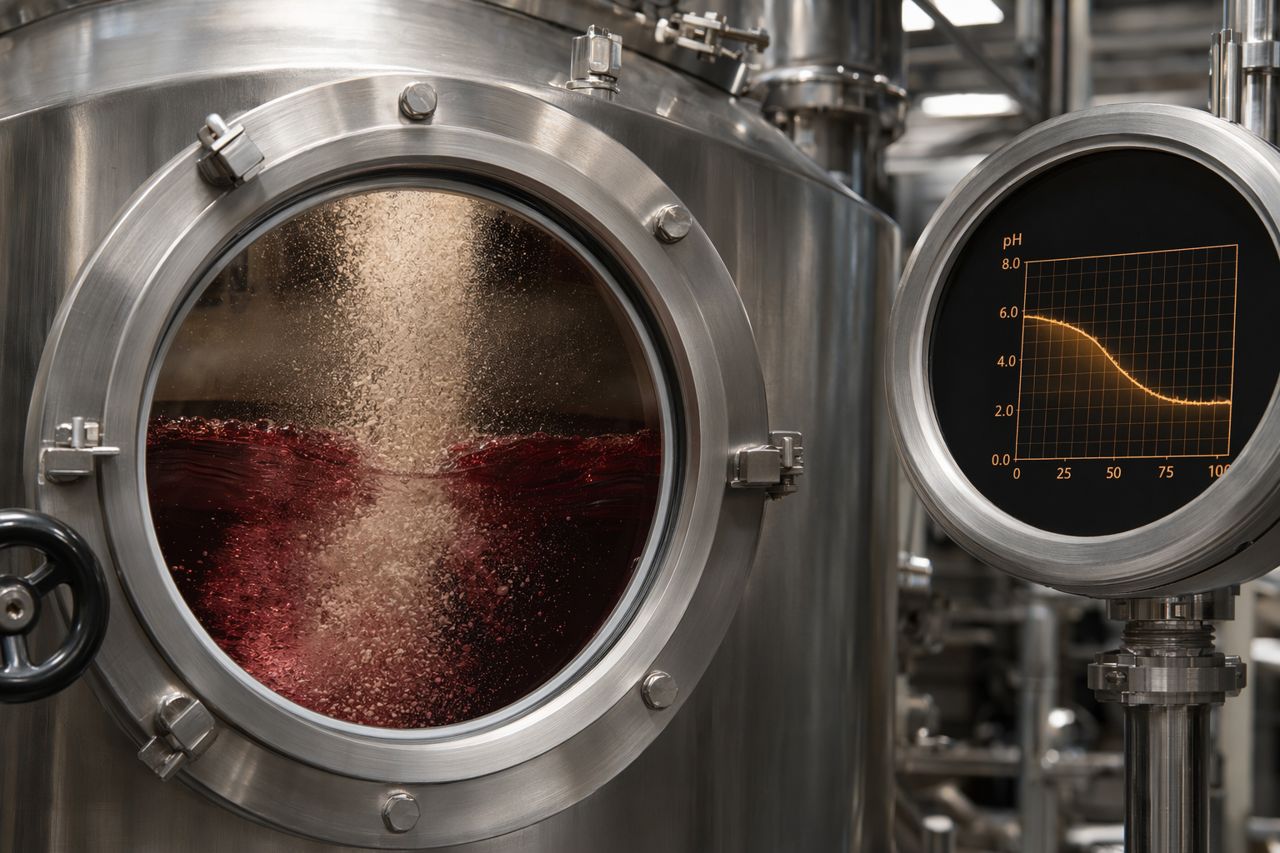
Pepsin is generally introduced into acidic aqueous systems or pre-dissolved under controlled conditions before addition to protein substrates. Process teams should validate the best addition method for their formulation, substrate, mixing regime, and target hydrolysis profile.
Pepsin performance is highly context-dependent. Substrate type, solids content, pH, temperature, mixing, and contact time all influence the final protein profile.
Pepsin belongs in controlled-acidity process windows. It should be kept away from incompatible residues and harsh cleaning carryover.
Before production, confirm that equipment has been rinsed and released according to site cleaning procedures. Pay particular attention to:
A technically correct pepsin addition can still underperform if the vessel environment is not ready.
Pepsin powder should be managed under a documented shelf-life or retest program. Procurement and QA should align on acceptance criteria before purchase, especially for long production campaigns or annual supply agreements.
Ask for clarity on:
For plants using pepsin in validated production, smaller pack sizes may reduce exposure risk even when the per-kilogram price is higher. Total cost should account for waste, retesting, partial-container control, and batch consistency.
These mistakes are preventable with clear SOPs and packaging choices that fit the production rhythm.
When sourcing pepsin powder, provide the process context instead of asking only for price. A better technical brief helps procurement compare offers correctly.
Include:
Mordant supports industrial buyers evaluating pepsin for controlled-acidity protein processing. Share the operating context, and we will help identify the right specification and packaging approach.
Use the form below to request a quote, check availability, or discuss pepsin handling requirements for your facility.
Tell us your application and target volume — we reply with pricing, lead time, and CoA/SDS documentation.