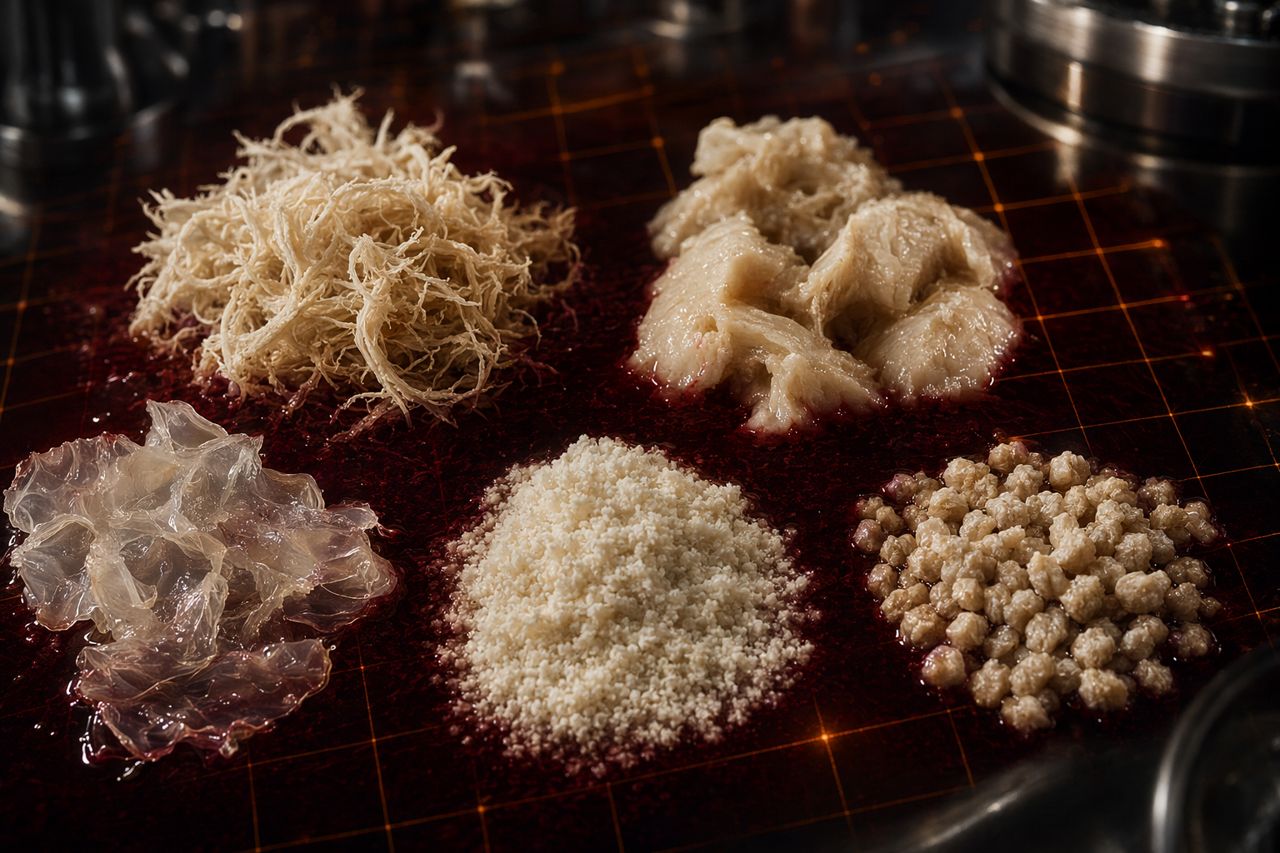
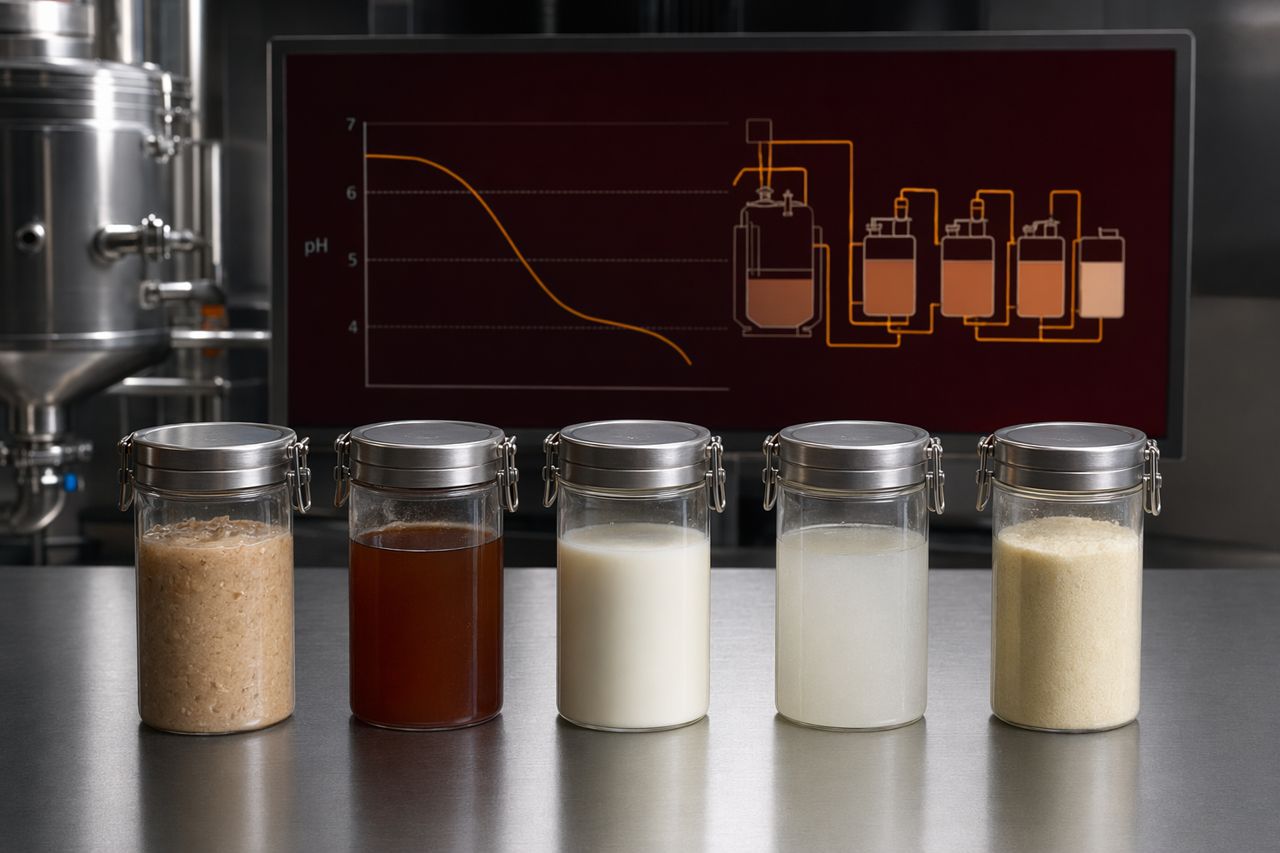
Pepsin Substrates: Animal, Marine, Dairy, Collagen, and Specialty Proteins
A practical B2B guide to proteins commonly processed with pepsin, including animal, marine, dairy, collagen, and specialty substrates under controlled acidic conditions.
Pepsin Substrates: Proteins Commonly Processed with Pepsin
Pepsin is a low-pH protease used where controlled acidity is not a limitation but an operating advantage. In industrial protein processing, it is selected for its ability to cleave peptide bonds preferentially near hydrophobic and aromatic amino acid residues, producing defined shifts in solubility, viscosity, extractability, and peptide profile.
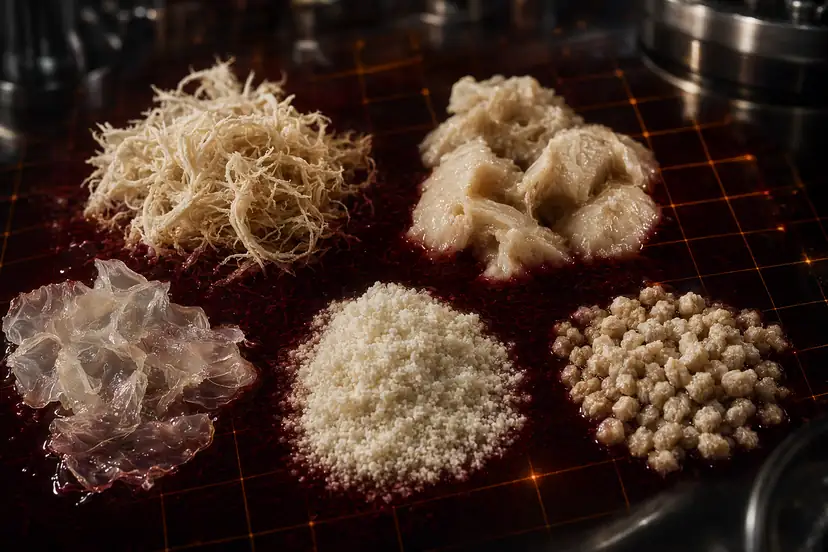
For formulation scientists and process engineers, the substrate matters as much as the enzyme. Animal tissue, fish protein, dairy fractions, collagen-rich material, and specialty protein streams all respond differently depending on pretreatment, pH, temperature, solids loading, fat level, mineral content, and exposure time.
This guide maps pepsin to the protein materials most commonly evaluated in B2B hydrolysis, extraction, and modification workflows.
Why substrate selection matters
Pepsin performs best in acidic systems. That makes it especially useful when a process already requires low pH for extraction, protein unfolding, microbial control, mineral adjustment, or downstream separation.
Substrate selection affects:
Hydrolysis profile — degree of fragmentation and peptide distribution
Solubility — improved dispersion in acidic or mildly acidic systems
Viscosity — reduction in thick protein slurries or extracts
Yield — release of soluble protein from structured matrices
Filtration behavior — fewer gels and easier phase separation when conditions are tuned
Sensory and functional outcome — bitterness, mouthfeel, color, and reactivity may shift with processing intensity
Pepsin is rarely a generic drop-in enzyme. It is most effective when matched to the protein structure and process endpoint.
Substrate map: where pepsin is commonly evaluated
Substrate category
Typical material forms
Why pepsin is used
Key process considerations
Animal proteins
Meat trimmings, tissue proteins, organ-derived protein streams
Animal-derived protein streams are among the most common candidates for pepsin processing because many are dense, structured, and responsive to acid-assisted proteolysis.
Common animal protein inputs
Lean meat trimmings
Mechanically separated protein streams
Organ-derived proteins
Connective tissue-rich fractions
Blood-derived protein fractions, where permitted and appropriately controlled
Bone-adjacent residual protein streams after mechanical separation
What pepsin can help achieve
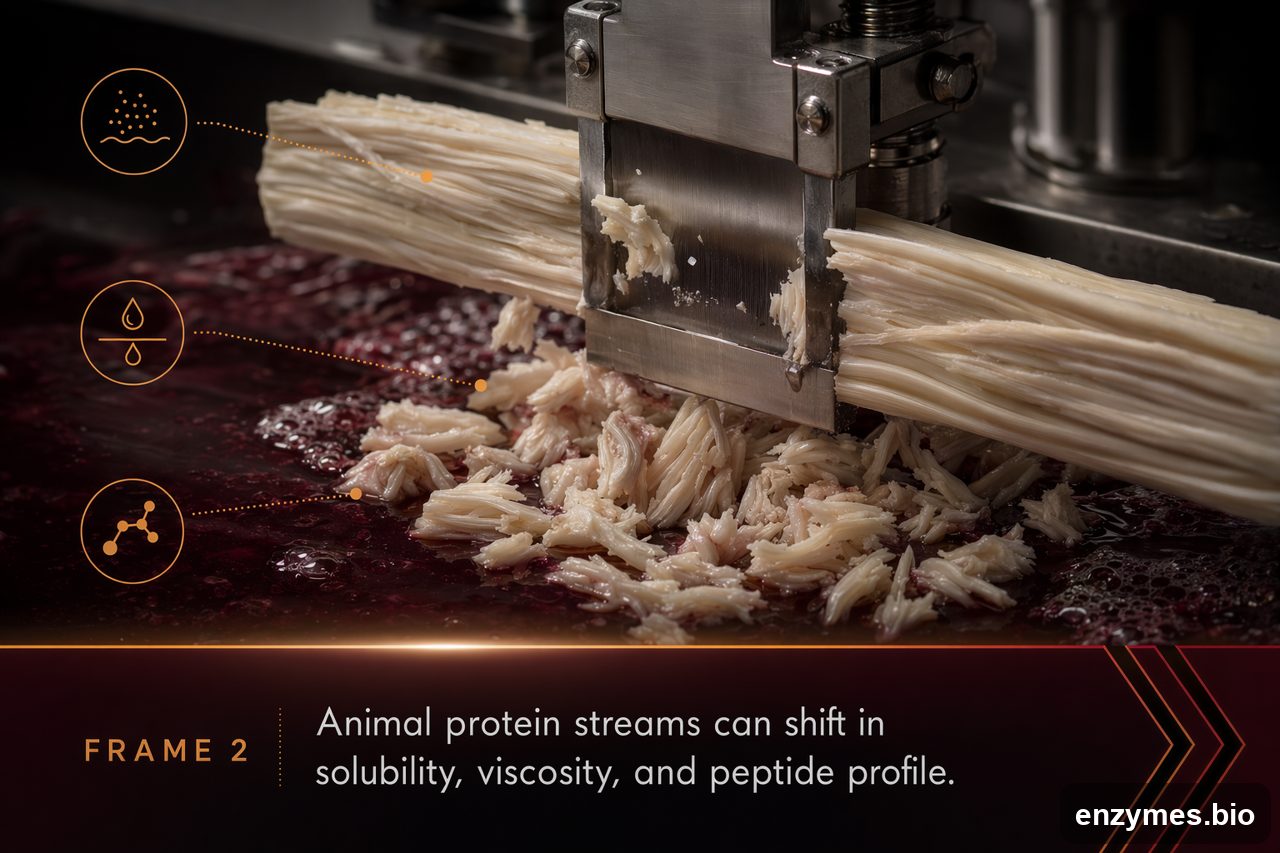
Pepsin can reduce protein structure, improve extractability, and generate soluble peptides from otherwise difficult matrices. In acidic hydrolysis systems, it can also help lower viscosity and improve pumpability before separation or concentration.
Practical watchpoints
Animal protein substrates often carry fat, connective tissue, heme pigments, and mineral variability. These factors can influence flavor, color, emulsion behavior, and separation efficiency. For consistent results, processors typically control particle size, homogenization intensity, defatting strategy, and acid addition sequence before enzyme contact.
Marine protein substrates
Marine materials are highly relevant for pepsin because many fish and seafood protein streams are already processed under acidic extraction or stabilization regimes.
Common marine inputs
Fish mince
Fish frames and residual flesh
Fish skin
Fish viscera-derived protein streams
Shellfish-associated protein fractions
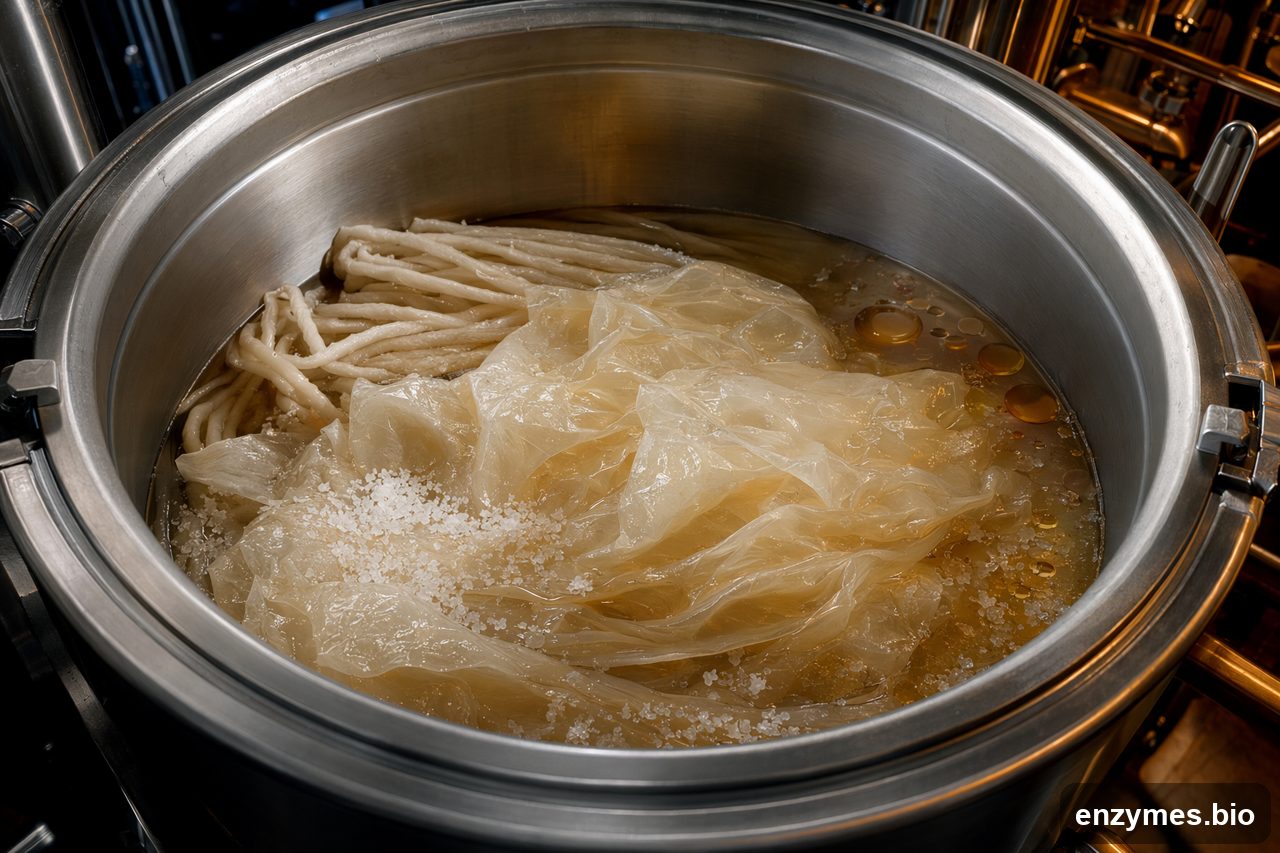
Marine collagen and gelatin feedstocks
Why pepsin is selected
Pepsin can support protein recovery from complex marine matrices and produce hydrolysates with controlled solubility and peptide characteristics. It is also useful when processors need to reduce slurry viscosity during acidic extraction.
Practical watchpoints
Marine streams require tight control of lipids, oxidation, odor precursors, and salt. Mineral content and ash can complicate pH control. Freshness and cold-chain integrity strongly affect final color and sensory profile, even when the enzymatic step is technically successful.
Dairy protein substrates
Pepsin is used selectively in dairy protein modification, especially where the process design includes a controlled acidic stage.
Common dairy inputs
Casein-rich fractions
Acid casein systems
Milk protein concentrates under acidic processing conditions
Selected whey protein blends after appropriate pretreatment
Co-processed dairy protein bases for peptide generation
What pepsin can help achieve
Pepsin can modify casein-rich proteins and influence solubility, peptide size, and functional behavior. It may be evaluated where acid-stage hydrolysis is needed before neutralization, concentration, drying, blending, or further enzymatic treatment.
Practical watchpoints
Dairy systems are sensitive to heat history, calcium balance, prior denaturation, and pH drift. Casein and whey proteins do not behave the same way under acidic conditions, so bench screening should separate substrate type, pretreatment, and endpoint rather than treating all dairy proteins as one category.
Collagen and gelatin-related substrates
Collagen-rich materials behave differently from globular proteins. They are fibrous, crosslinked, and heavily influenced by pretreatment.
Common collagen-rich inputs
Bovine hide and split-derived collagen
Porcine skin-derived collagen
Fish skin collagen
Bone-associated collagen residues
Gelatin production intermediates
Collagen-containing trimmings from animal and marine processing
Why pepsin is evaluated
Pepsin can help remove non-collagenous proteins and assist extraction of collagen fractions under acidic conditions. In some workflows, it is used to influence molecular size distribution or to prepare collagen-containing materials for downstream purification.
Practical watchpoints
The main variables are pretreatment, swelling, ash, crosslink density, and target functionality. A process designed for maximum extraction may not produce the same material quality as a process designed for gel strength, clarity, or peptide consistency. Define the endpoint before choosing intensity.
Specialty protein substrates
Pepsin is also screened against emerging and specialized protein streams where acid compatibility, structure modification, or peptide development is required.
Examples of specialty substrates
Egg protein fractions
Insect-derived protein streams
Fermented animal-origin protein fractions
Protein side streams from precision or hybrid fermentation processes
Blood-derived and plasma-derived protein materials, subject to market and regulatory controls
Mixed protein substrates containing animal, dairy, or marine components
Why pepsin may be useful
Specialty proteins often require a defined structural shift rather than full breakdown. Pepsin can be used to create a more soluble, lower-viscosity, or more processable protein intermediate when the matrix tolerates low-pH exposure.
Practical watchpoints
Novel and specialty substrates require careful documentation. Procurement teams should align enzyme origin, manufacturing controls, compliance needs, allergen declarations, and application restrictions before scale-up.
Matching pepsin to substrate objectives
Pepsin is usually selected for one of five industrial objectives:
Protein solubilization — moving structured protein into the liquid phase
Viscosity reduction — improving pumping, mixing, filtration, or evaporation
Peptide generation — producing hydrolysates with controlled size distribution
Extraction assistance — releasing protein from collagenous, marine, or animal matrices
Pre-treatment for further processing — preparing material for neutralization, polishing, additional enzymes, drying, or blending
The right substrate is one that benefits from acidic proteolysis without compromising the final specification.
Key process variables to define before requesting pepsin
Before sourcing pepsin for substrate trials, define the operating envelope. This prevents over- or under-specifying the enzyme and helps procurement compare offers on usable performance rather than generic descriptions.
Recommended process details
Protein source and species origin
Fresh, frozen, dried, rendered, fermented, or concentrated status
Approximate protein, fat, ash, and moisture profile
Regulatory and documentation requirements for the target market
Common substrate fit notes
Best-fit conditions
Pepsin is usually strongest when the substrate can be held in a stable acidic range and when protein unfolding improves access to cleavage sites. It is a good candidate when acid is already part of the process design.
Caution conditions
Pepsin may be less attractive if the substrate cannot tolerate acidity, if downstream flavor is highly sensitive, or if the target functionality depends on preserving intact protein structure.
Scale-up conditions
Scale-up should account for mixing quality, acid addition rate, heat transfer, foam, slurry density, and the timing of enzyme inactivation or separation. Many pepsin failures are not substrate failures; they are control failures.
Procurement considerations
When buying pepsin for industrial substrate processing, procurement teams should request documentation aligned with the use case rather than relying on broad product labels.
Useful commercial checks include:
Enzyme source and manufacturing route
Food, feed, technical, or specialty processing suitability
Compliance documentation for the intended market
Allergen and animal-origin statements where relevant
Lot-to-lot consistency controls
Packaging format and storage conditions
Lead time, volume availability, and change-control expectations
Application support for substrate-specific trials
Bottom line
Pepsin is a precision tool for acidic protein processing. It is most relevant for animal, marine, dairy, collagen, and specialty protein substrates where low-pH conditions can unlock better solubility, lower viscosity, improved extraction, or controlled peptide formation.
The highest-performing projects start with the substrate, define the endpoint, and then tune the enzyme step around controlled acidity.
Request pricing or substrate guidance
Share your substrate, process conditions, and target outcome. Mordant will help align pepsin grade, documentation, packaging, and trial planning for your application.