Technical Reference
Pepsin vs Bromelain, Papain, and Other Proteases
Compare pepsin with bromelain, papain, neutral proteases, and alkaline proteases for controlled low-pH protein processing, sourcing, formulation fit, and procurement decisions.
Technical Reference
Compare pepsin with bromelain, papain, neutral proteases, and alkaline proteases for controlled low-pH protein processing, sourcing, formulation fit, and procurement decisions.
Pepsin is not a general-purpose protease. It is an acid-phase protein processing tool.
For formulation scientists and process engineers, that distinction matters. Pepsin performs under controlled low-pH conditions where many neutral and alkaline proteases lose relevance. Bromelain and papain bring plant-derived flexibility. Neutral and alkaline proteases bring broad process utility. Pepsin brings acidic specificity, predictable deactivation behavior, and strong fit in workflows where the process is already built around low pH.
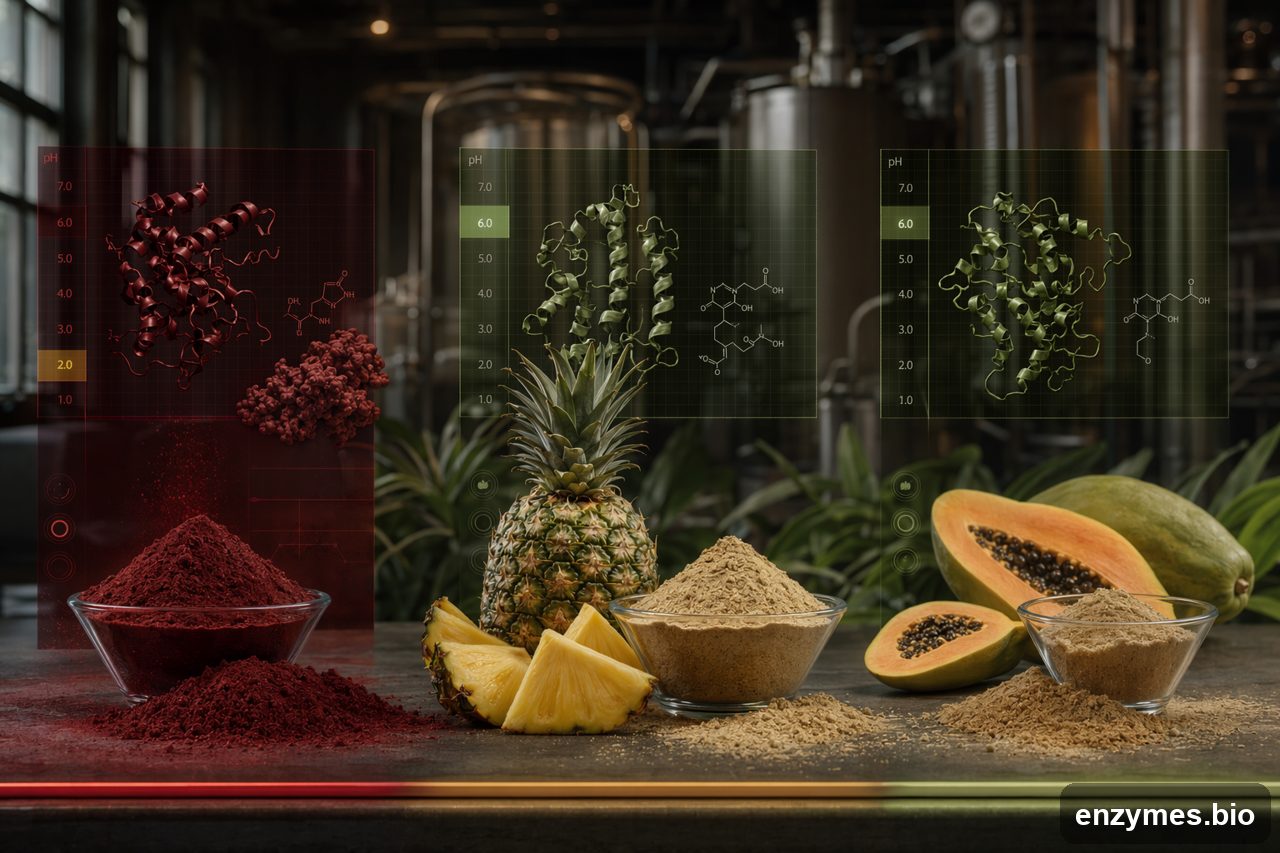
This guide compares pepsin with common industrial proteases so teams can select the right enzyme before scale-up, sourcing, and validation.
Choose pepsin when your protein process requires:
Choose bromelain or papain when you need plant-derived proteolysis, broader pH flexibility, or a cysteine protease profile.
Choose neutral or alkaline microbial proteases when the process is built around higher pH, detergent systems, broad hydrolysis, or high-throughput protein breakdown rather than acid-phase selectivity.
Pepsin, properly described as Pepsin (Aspartic Endopeptidase), is an acid protease. Its defining feature is not simply that it breaks proteins. It is that it does so under acidic conditions with a cleavage profile that favors certain peptide bonds, especially around hydrophobic and aromatic residues.
In industrial language: pepsin is useful when the process environment is acidic by design.
| Factor | Pepsin profile |
|---|---|
| Enzyme class | Aspartic endopeptidase |
| Typical operating environment | Acidic processing systems |
| Best fit | Low-pH protein hydrolysis and controlled digestion workflows |
| Source considerations | Commonly animal-derived; origin documentation matters |
| Downstream behavior | Reduced function as pH moves away from acidic conditions |
| Procurement focus | Origin, grade, consistency, documentation, and application fit |
Pepsin should be evaluated as part of the full process: substrate, pH, temperature exposure, residence time, downstream neutralization, filtration, and regulatory documentation.
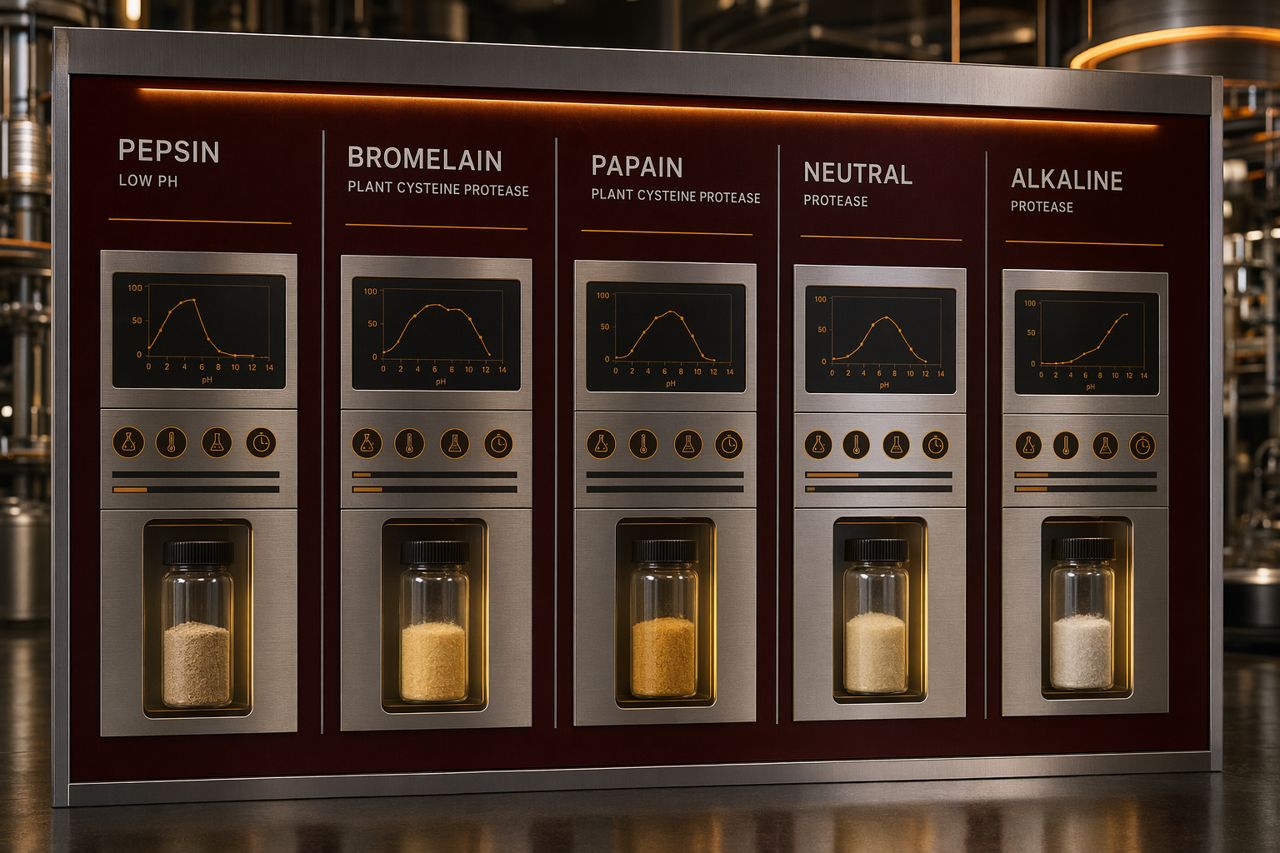
Bromelain is a plant-derived cysteine protease typically sourced from pineapple material. It is often selected when buyers want a botanical origin, broader pH compatibility, or a different positioning profile from animal-derived proteases.
If your process begins acidic and stays acidic through the hydrolysis step, pepsin usually deserves first evaluation. If sourcing narrative, plant origin, or wider pH compatibility carries more weight, bromelain may be the better candidate.
Papain is another plant-derived cysteine protease, commonly sourced from papaya latex. It is widely used where broad proteolysis and plant origin are valued.
Papain is broad and versatile. Pepsin is more conditional. That condition—acid—is exactly why it is useful. If acid is part of your process architecture, pepsin can be more aligned than a plant cysteine protease forced into the wrong window.
Neutral proteases are typically selected for processes operating near neutral pH. Many are microbial-derived and used across food, fermentation, protein hydrolysate, and industrial processing systems.
Neutral proteases are process-friendly in many facilities because they avoid aggressive pH adjustment. Pepsin is different: it belongs where acidity is intentional, controlled, and beneficial.
Alkaline proteases, including many subtilisin-type enzymes, are built for higher-pH environments. They are common in detergents, cleaning systems, leather processing, and broad industrial hydrolysis.
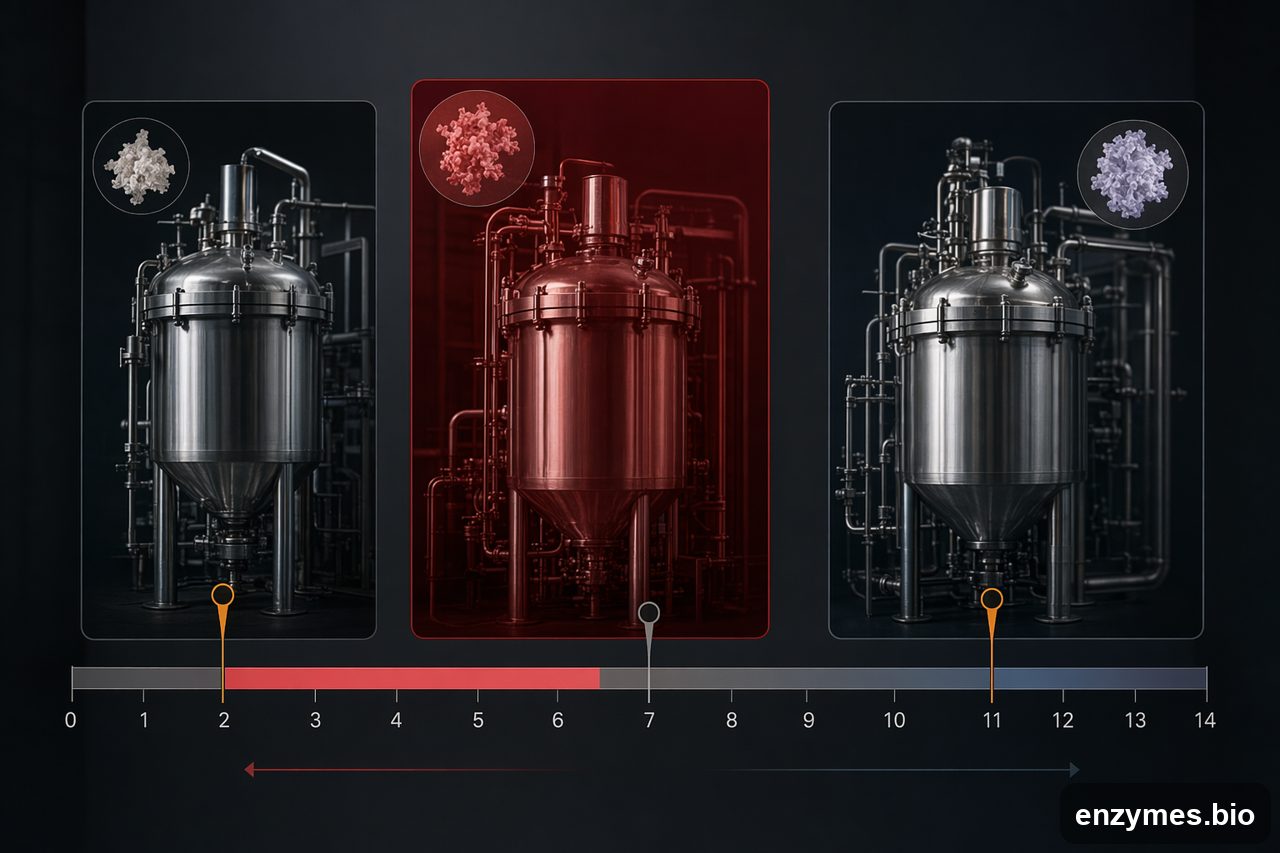
Pepsin and alkaline proteases are rarely interchangeable. They occupy different process chemistries. The first selection question should be pH, not price.
Trypsin is a serine protease with a more defined cleavage preference and is often used where specificity around certain basic amino acid residues is required. Other proteases may be selected for narrow cleavage behavior, analytical workflows, or specialized bioprocessing.
Pepsin is different. It is not chosen because it mimics trypsin. It is chosen because it enables acid-phase endoproteolysis with useful substrate access in denatured or acid-treated proteins.
Pepsin is most relevant in B2B protein processing where acidic treatment is not a workaround but a design feature.
Pepsin can support controlled modification of collagen-rich substrates and acid-conditioned protein matrices. It is often considered where texture, solubility, yield, and downstream separation need to be balanced.
In acid-compatible protein systems, pepsin may be evaluated for peptide development, solubility adjustment, or functional protein modification. It should be screened against target sensory and functional specifications.
For animal protein streams, pepsin can help convert acidified raw material into more processable hydrolysates. It is relevant when teams are building value from trimming, connective tissue, or mixed protein fractions.
Pepsin is commonly encountered in lab protocols, but production use requires a different lens: supply continuity, documented origin, grade suitability, lot consistency, and process economics.
Before requesting pricing, align internally on the specification that actually matters to your process.
| Protease | Best process fit | Source profile | Main reason to choose | Main limitation |
|---|---|---|---|---|
| Pepsin | Acidic protein processing | Commonly animal-derived | Low-pH specificity and acid compatibility | Not ideal outside acidic systems |
| Bromelain | Broad plant-derived proteolysis | Pineapple-derived | Botanical origin and flexible use | Different cleavage profile from pepsin |
| Papain | Broad plant-derived proteolysis | Papaya-derived | Versatile cysteine protease behavior | May not match acid-specific workflows |
| Neutral protease | Near-neutral processing | Often microbial | Process-friendly pH range | Less suited to low-pH acid hydrolysis |
| Alkaline protease | High-pH industrial systems | Often microbial | Robust broad hydrolysis | Poor fit for acid-sensitive workflows |
| Trypsin | Specific cleavage workflows | Animal or recombinant options | Defined specificity | Different pH and substrate strategy |
Start with process chemistry.
If the process is acidic, pepsin belongs on the shortlist. If the process is neutral, look at neutral proteases. If the process is alkaline, evaluate alkaline proteases. If the sourcing story requires plant origin, compare bromelain and papain first.
Pepsin is not the broadest protease. That is the point. It is a controlled acid tool for protein systems that need precision under low-pH conditions.
Tell us the substrate, process pH, intended application, and expected order scale. Mordant will route the request to the right technical and commercial review path.
Tell us your application and target volume — we reply with pricing, lead time, and CoA/SDS documentation.