What Is Pepsin? Acidic Protease for Controlled Protein Cleavage
Pepsin is an acidic aspartic endopeptidase used for controlled protein hydrolysis under low-pH processing conditions. Learn how it differs from broad protease categories.
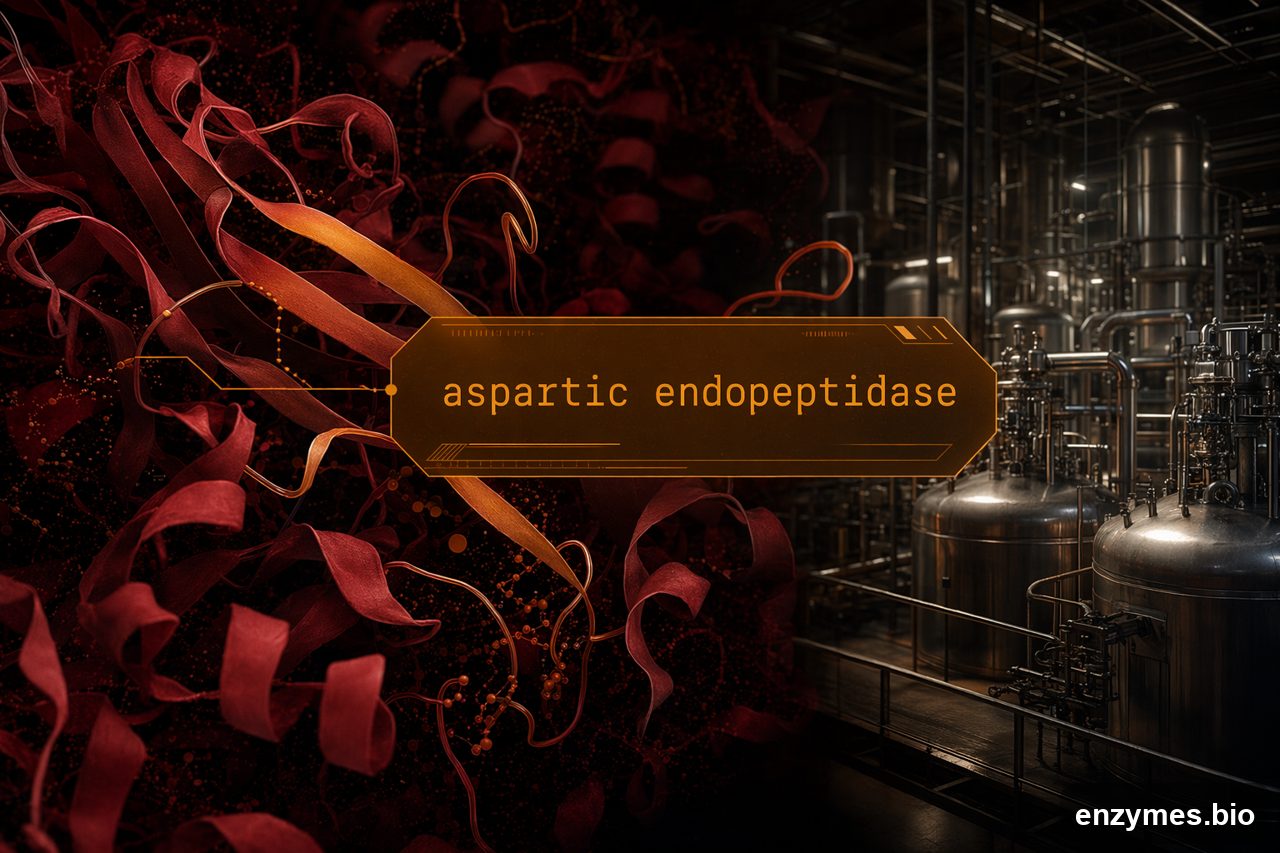
Pepsin is a proteolytic enzyme built for acidic conditions. More precisely, Pepsin (Aspartic Endopeptidase) is an acidic protease that cleaves peptide bonds inside protein chains, converting larger proteins into smaller peptides and fragments under controlled low-pH processing.
For B2B buyers, the important distinction is this: pepsin is not just “a protease.” It is a specific acidic endopeptidase with a particular operating profile, substrate behavior, and fit within protein-processing workflows.
Where broad protease language can hide critical formulation risk, pepsin gives process teams a sharper specification: controlled cleavage in acidic systems.
Pepsin, Defined for Industrial Buyers
Pepsin belongs to the aspartic protease family. In practical industrial language, that means it is selected when a process needs protein breakdown under acidic conditions rather than neutral or alkaline conditions.
Pepsin is commonly considered when teams need to:
Modify protein structure under controlled acidity
Generate peptide-rich materials from protein substrates
Support low-pH hydrolysis steps
Improve downstream handling, solubility, or filtration behavior depending on the substrate
Build a repeatable process around defined protein cleavage rather than general proteolysis
Its usefulness comes from the combination of acid compatibility, endopeptidase action, and predictable process control.
What “Aspartic Endopeptidase” Means
The proper name matters.
Aspartic refers to the catalytic chemistry of the enzyme family. Endopeptidase means the enzyme cleaves peptide bonds within the internal structure of a protein chain, rather than trimming only from the ends.
In application terms, pepsin acts inside the protein architecture. That can reduce large proteins into smaller fragments and alter functional properties such as dispersibility, viscosity, digestibility for non-medical industrial contexts, and downstream separability depending on the starting material and process design.
Pepsin is therefore specified less like a generic additive and more like a process tool.
Why Acidity Is the Core Specification
Pepsin is valued because its performance profile aligns with acidic processing. That low-pH environment is not a side note; it is the operating frame.
A formulation scientist or process engineer may choose pepsin when:
The substrate is already held in an acidic medium
The process requires acidic compatibility before neutralization or separation
Neutral or alkaline proteases would create off-target hydrolysis, instability, or process mismatch
The desired peptide profile depends on controlled acidic cleavage
The manufacturing line is designed around acid conditioning, acid extraction, or acid hydrolysis support
This is where pepsin separates itself from broad “protease” procurement language. A protease request may be too vague. A pepsin specification narrows the field to acidic protein processing.
Pepsin vs. General Protease
“Protease” is a category. Pepsin is a specific enzyme within that category.
General protease language may not define:
Preferred pH environment
Cleavage behavior
Substrate compatibility
Processing sequence
Downstream impact
Documentation expectations
Formulation constraints
Pepsin specification should define:
Acidic processing requirement
Protein substrate type
Desired hydrolysis outcome
Process hold conditions and sequence
Inactivation or downstream separation plan
Grade, format, and documentation needs
Packaging and procurement expectations
For technical purchasing, the difference matters. Buying “protease” can invite misalignment. Buying pepsin starts with a defined acidic mechanism.
Typical Industrial Use Cases
Pepsin is used where proteins need to be modified with precision under low-pH conditions. Application fit depends on substrate, process design, and target material profile.
Common B2B evaluation areas include:
Protein hydrolysate production for controlled peptide generation
Collagen and gelatin processing support where acidic cleavage behavior is relevant
Specialty food and ingredient processing where protein modification must occur in acidic systems
Bioprocessing and laboratory-scale manufacturing workflows that require specific acidic proteolysis
Technical protein modification where broad alkaline proteases are not appropriate
Mordant positions pepsin as an industrial enzyme for controlled process design—not as a consumer wellness term, and not as a vague protease substitute.
What Buyers Should Confirm Before Specifying Pepsin
A good pepsin inquiry is not just a price request. It should help define the processing window and commercial constraints.
Before requesting a quote, prepare the following:
Protein substrate
Source material, concentration range, pretreatment, and variability concerns.
Process acidity
Target low-pH environment, acid type if relevant, and whether acidity changes during processing.
Hydrolysis objective
Smaller peptides, viscosity change, solubility improvement, separation behavior, or a defined functional target.
Process sequence
When pepsin is added, how long the step runs, and what happens after cleavage.
Form and handling preference
Powder, granulated, or other supply expectations where applicable.
Documentation requirements
Technical data, safety documentation, quality documentation, country-of-origin expectations, and regulatory alignment for the intended market.
The more specific the inquiry, the faster a supplier can recommend a fit-for-process grade.
Process Considerations for Pepsin
Pepsin is typically evaluated as part of a controlled hydrolysis system. The enzyme does not work in isolation; it interacts with acidity, substrate accessibility, mixing, temperature management, residence time, and downstream handling.
Key engineering considerations include:
Maintaining a stable acidic environment during the cleavage step
Ensuring adequate substrate dispersion before enzyme addition
Avoiding process conditions that reduce consistency batch to batch
Planning how hydrolysis will be stopped or transitioned
Evaluating peptide profile against the application target
Confirming filtration, clarification, drying, or formulation compatibility after hydrolysis
Pepsin performs best when the process is designed around its acidic profile rather than forced into a generic protease workflow.
Procurement Notes: How to Write a Better Pepsin RFQ
For procurement teams, pepsin sourcing should balance price, fit, documentation, and continuity of supply.
A stronger RFQ should include:
“Pepsin (Aspartic Endopeptidase)” rather than only “protease”
Intended industrial application
Substrate and process pH context
Required form and packaging
Expected annual or campaign volume
Required documentation package
Target delivery region and timing
Whether the request is for qualification, scale-up, or recurring supply
This avoids under-specified quoting and reduces the risk of evaluating products that are not designed for acidic protein processing.
The Mordant View
Pepsin is a precision tool for acidic protein cleavage. It belongs in processes where low-pH compatibility is not optional and where broad protease language is too imprecise.
If your application depends on controlled hydrolysis, clear documentation, and a supply conversation grounded in process reality, specify pepsin by its role: acidic aspartic endopeptidase for industrial protein processing.
Request a Quote
Send your substrate, process context, and documentation requirements. Mordant will review the fit and respond with pricing guidance for the appropriate pepsin supply option.
Prefer a faster commercial reply? Include target delivery region, required documentation, and whether the request is for trial, scale-up, or recurring procurement.